
Redness & visible vessels
Does Coffee Trigger Rosacea? Hot Drinks, Caffeine and Spicy Food: What the Evidence Shows
Information to help you prepare questions. Treatment suitability, risks and aftercare are assessed individually with the clinic.
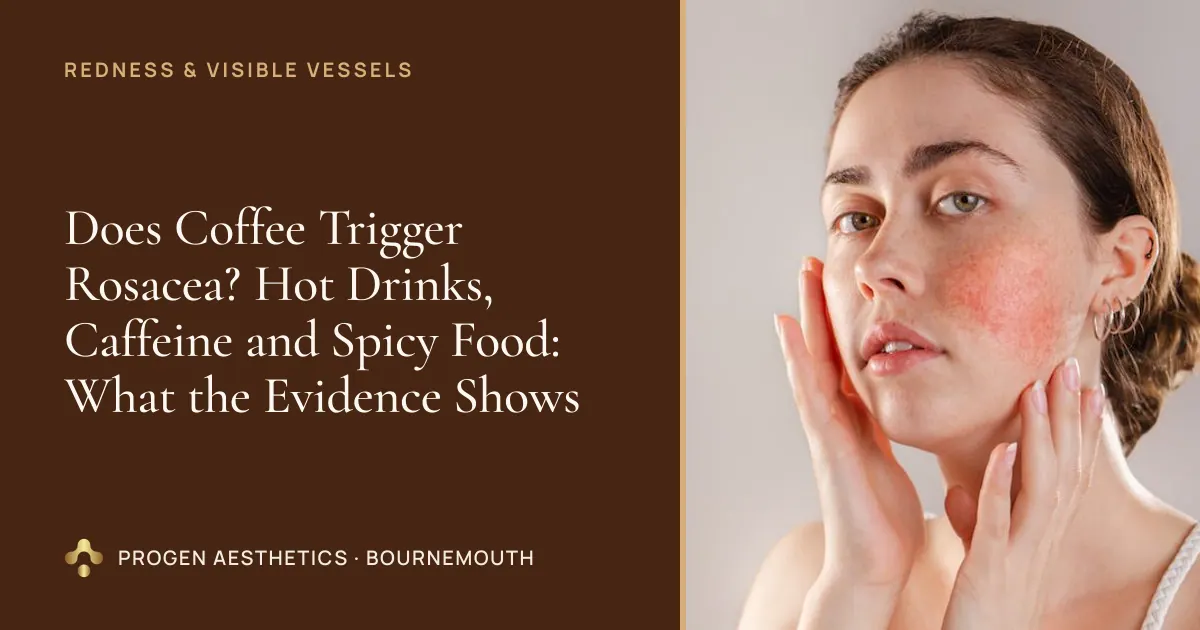
Short answer: hot drinks and spicy food are commonly listed as rosacea triggers, but the evidence that coffee itself is a problem is thin and mixed. The one lab test found that heat flushed the face, not caffeine, and large observational studies have linked caffeinated coffee with a lower chance of being diagnosed with rosacea. None of that tells you how your own skin reacts, so noting what happens after a hot drink is more useful than a blanket rule.
If you are weighing up rosacea treatment in Bournemouth, it helps to separate three questions that headlines blur together: does the temperature of a drink matter, does caffeine matter, and does coffee affect whether someone develops rosacea at all. The studies answer them differently. Figures below are as of 18 November 2026.
What the NHS, BAD and AAD say
- NHS: it is not known what causes rosacea, but some things can make symptoms worse. Its list of common triggers includes alcohol, spicy foods, hot drinks, sunlight, hot or cold temperatures, aerobic exercise and stress. The page was last reviewed on 17 March 2023, with a next review date of 17 March 2026 that has now passed.
- British Association of Dermatologists (BAD) patient leaflet: lists alcohol, exercise, high and low temperatures, hot drinks, spicy foods and stress as factors that can make rosacea worse, and says keeping a diary of what worsens it may help. It does not mention caffeine. It was last updated in May 2022, with a review date of May 2025 that has also passed.
- American Academy of Dermatology (AAD): says the heat from hot drinks causes some people's rosacea to flare, and suggests an iced drink or letting it cool to warm or lukewarm. For spicy food it suggests trying milder versions first and avoiding it if the rosacea still flares. The page shows no review date.
All three describe triggers as things that can worsen existing symptoms in some people. None says coffee or spicy food causes rosacea.
Heat or caffeine? The one controlled test
A 1981 study by Wilkin in people with erythematotelangiectatic rosacea (the type dominated by flushing and redness) tested coffee and caffeine directly. At 22°C, neither caused flushing. Coffee and plain water at 60°C both did, with similar timing and intensity. The author concluded that heat, not caffeine, was the active trigger.
This is the main reason dermatology advice talks about temperature, not coffee. It is also old and was a laboratory test of oral heat, so it does not show how often a normal cup at a normal drinking temperature flushes someone's face.
Does coffee raise or lower the chance of developing rosacea?
This is a different question from "does it make my flushing worse?", and the studies do not agree.
| Study | Design | What it reported | Limit to keep in mind |
|---|---|---|---|
| Li et al., JAMA Dermatology, 2018 | Cohort of 82,737 women (Nurses' Health Study II), 4,945 new rosacea cases over 1,120,051 person-years | Highest versus lowest caffeine quintile: hazard ratio 0.76 (95% CI 0.69 to 0.84). Four or more servings of caffeinated coffee a day versus under one a month: 0.77 (0.69 to 0.87). Decaffeinated coffee was not significantly associated (0.80, 0.56 to 1.14). Caffeine from tea, soda and chocolate was not significantly associated. | Women only; an association, not proof of cause. Press summaries note rosacea diagnoses were self-reported and the group was mostly white. |
| Yildirim et al., Skin Health and Disease, 2022 (letter) | Correlation of rosacea with coffee and tea intake in a large UK cohort | Caffeinated coffee drinkers had lower odds of a rosacea diagnosis than non-coffee drinkers. | The abstract gives no sample size or effect sizes; the authors' explanation (caffeine narrowing blood vessels outweighing the effect of heat) is a hypothesis. |
| Kunwar et al., Journal of Cosmetic Dermatology, 2025 | Questionnaire case-control study, 200 people with rosacea and 200 without, in China | Hot coffee was among the factors significantly associated with rosacea; hot tea, and hot and spicy food, were not. | The abstract gives no odds ratios. It compares who has rosacea, not what sets off a flare, and a modest sample can miss small effects. |
Read together: two studies found caffeinated coffee linked with lower odds of a rosacea diagnosis, and one smaller case-control study found hot coffee linked with having rosacea. These studies cannot tell you why. They cannot rule out explanations such as people with flushing cutting back on coffee, and they do not test whether coffee helps or worsens rosacea you already have. The authors of the 2018 cohort wrote that their findings do not support limiting caffeine intake as a means to prevent rosacea. That is a statement about prevention, not advice to drink more coffee, and it says nothing about flushing after a very hot drink.
Spicy food: often reported, little tested
A 2021 review of the rosacea and diet literature (Searle et al.) found that spicy food and hot drinks were among the most frequently reported triggers, alongside alcohol, foods containing cinnamaldehyde and histamine-rich foods. It concluded that no dietary recommendation applies to all patients. A 2022 review in Clinics in Dermatology (Alia and Feng) lists hot drinks, spicy food and caffeine among proposed triggers but says well-designed controlled studies of whether diet causes rosacea are lacking.
The 2025 case-control study above found no significant link between hot and spicy food and having rosacea. That fits the NHS, BAD and AAD framing: spicy food is something some people notice worsens flushing or stinging, not something shown to cause the condition.
What this means in practice
- Temperature first, then the drink. If hot drinks seem to bring on flushing, the AAD suggestion of letting the drink cool or having it iced tests the heat explanation without changing what you drink. Our guide to managing rosacea triggers covers drink temperature alongside other triggers.
- Keep a short diary. The BAD leaflet says a diary of what worsens rosacea may help. Useful details are what you ate or drank, its temperature, how soon flushing started and what else happened that day, such as sun, heat or stress.
- Do not assume one cause. Redness after a hot drink, a spicy meal and a glass of wine on the same day cannot be separated. For alcohol specifically, see does alcohol cause rosacea or only trigger flare-ups.
- Do not rely on a percentage. Survey figures on how many people react to a food describe what patients perceived, not what is true for you.
- Check skincare too. Flares are not only dietary; see rosacea skincare ingredients to avoid.
When to see a GP
See a GP if you have symptoms of rosacea, especially if facial redness or flushing is new, persistent or changing. The NHS says to ask for an urgent GP appointment or call 111 if you have eye pain, blurred vision, sensitivity to light, a red eye or a gritty eye, as these can be signs of keratitis. Bring your diary: it makes the conversation more specific.
Where light treatment fits
Drinks and food are one part of rosacea care. The BAD leaflet lists laser therapy for redness and visible blood vessels among the options for rosacea, alongside creams, tablets and sun protection. Light treatment is aimed at visible redness and vessels, not at drink triggers, and this guide found no evidence that it prevents flushing after hot drinks or spicy food. Our guide to rosacea flushing or persistent redness and laser treatment explains what light treatment can and cannot target. Suitability is decided at a consultation, and it sits alongside GP care and trigger management rather than replacing them.
Frequently asked questions
Does coffee cause rosacea?
No study read for this guide shows that coffee causes rosacea. Two large observational studies found caffeinated coffee drinkers had lower odds of a rosacea diagnosis, and a smaller 2025 case-control study found hot coffee was among factors associated with having rosacea. These designs show associations, not cause, and they point in different directions.
Is it the heat or the caffeine in coffee that flushes the face?
In a 1981 laboratory study of people with flushing-type rosacea, coffee and caffeine at 22°C did not cause flushing, while coffee and plain water at 60°C both did, with similar timing and intensity. The author concluded that heat was the trigger. It is an old study and does not show how often an ordinary cup flushes someone.
Should I give up coffee if I have rosacea?
The NHS, BAD and AAD list hot drinks as something that can worsen rosacea for some people, and the AAD suggests iced or lukewarm drinks. The authors of the 2018 cohort study wrote that their findings do not support limiting caffeine intake to prevent rosacea. Whether coffee affects you is individual; a diary and a conversation with your GP are more useful than a blanket rule.
Is spicy food a rosacea trigger?
Reviews list spicy food among the most frequently reported triggers, and the AAD suggests trying milder versions and avoiding spicy food if it still causes flares. A 2025 case-control study found no significant link between hot and spicy food and having rosacea, so it appears to worsen symptoms in some people rather than cause the condition.
Will laser or light treatment stop flushing after hot drinks?
This guide found no evidence that it does, so no such claim is made. Light treatment is discussed for visible redness and blood vessels, and whether it suits you is decided at a consultation.
Ask about rosacea treatment in Bournemouth
Sources and further information
- Rosacea cause not known; alcohol, spicy foods, hot drinks, sunlight, hot or cold temperatures, aerobic exercise and stress listed as triggers; urgent GP or 111 for eye pain, blurred vision, light sensitivity, red or gritty eye (possible keratitis). Last reviewed 17 March 2023.
- Alcohol, exercise, high and low temperatures, hot drinks, spicy foods and stress listed as factors that can worsen rosacea; a diary may help; laser therapy for redness and visible blood vessels among treatment options; caffeine not mentioned. Updated May 2022.
- Heat from hot beverages causes some people's rosacea to flare; suggests iced or lukewarm drinks; try milder spicy dishes and avoid spicy food if flares persist.
- Wilkin 1981 (J Invest Dermatol, PMID 6450809): in erythematotelangiectatic rosacea, caffeine and coffee at 22°C did not cause flushing; coffee and water at 60°C both did with similar timing and intensity; author concluded heat, not caffeine, is the trigger.
- Li et al 2018 (JAMA Dermatol, PMID 30347034): 82,737 women, 4,945 incident rosacea cases, 1,120,051 person-years; highest vs lowest caffeine quintile HR 0.76 (0.69-0.84); caffeinated coffee 4+ servings/day vs <1/month HR 0.77 (0.69-0.87); decaf HR 0.80 (0.56-1.14) not significant; tea, soda and chocolate caffeine not significant; authors say findings do not support limiting caffeine to prevent rosacea.
- Yildirim, Fang and Kolodney (Skin Health Dis 2023;3(1):e154, epub 2022; PMID 36751326): in a large UK cohort, caffeinated coffee drinkers had lower odds of rosacea diagnosis than non-coffee drinkers; authors hypothesise caffeine's vasoconstriction outweighs the vasodilatory effect of hot beverages.
- Kunwar et al 2025 (J Cosmet Dermatol 24(8):e70337, PMID 40741710): case-control study of 200 people with rosacea and 200 controls; hot coffee significantly associated with rosacea; hot tea and hot and spicy food showed no significant link.
- Searle et al 2021 (J Clin Aesthet Dermatol 14(12):49-54): review searching PubMed, MEDLINE and EMBASE in July 2020; alcohol, spicy food, cinnamaldehyde foods, hot drinks and histamine-rich foods are the most frequently reported triggers; no dietary recommendation applies to all patients.
- Alia and Feng 2022 (Clin Dermatol 40(2):122-127, PMID 34819228): hot drinks, alcohol, spicy food, caffeine and others proposed as triggers; few well-designed controlled studies of whether diet causes rosacea.
More in rosacea and redness
Questions people ask next
- IPL or Laser for Rosacea Redness: How the Light Treatments Differ
- Does Alcohol Cause Rosacea or Only Trigger Flare-Ups? What the Evidence Shows
- Rosacea Flushing or Persistent Redness: What Light Treatment Can Target
- Do Demodex Mites Cause Rosacea? What the Evidence Shows and What to Ask Your GP
Treatment details, suitability and booking: rosacea treatment in Bournemouth. All rosacea and redness guides
Make an informed next step
Bring your questions
to a consultation.
A guide can help you prepare. Your assessment determines which options are appropriate for you.
Continue reading: Facial Thread Veins vs Rosacea: What Is the Difference?