
Redness & visible vessels
Thickened nose skin with rosacea (rhinophyma): what laser can and cannot change
Information to help you prepare questions. Treatment suitability, risks and aftercare are assessed individually with the clinic.
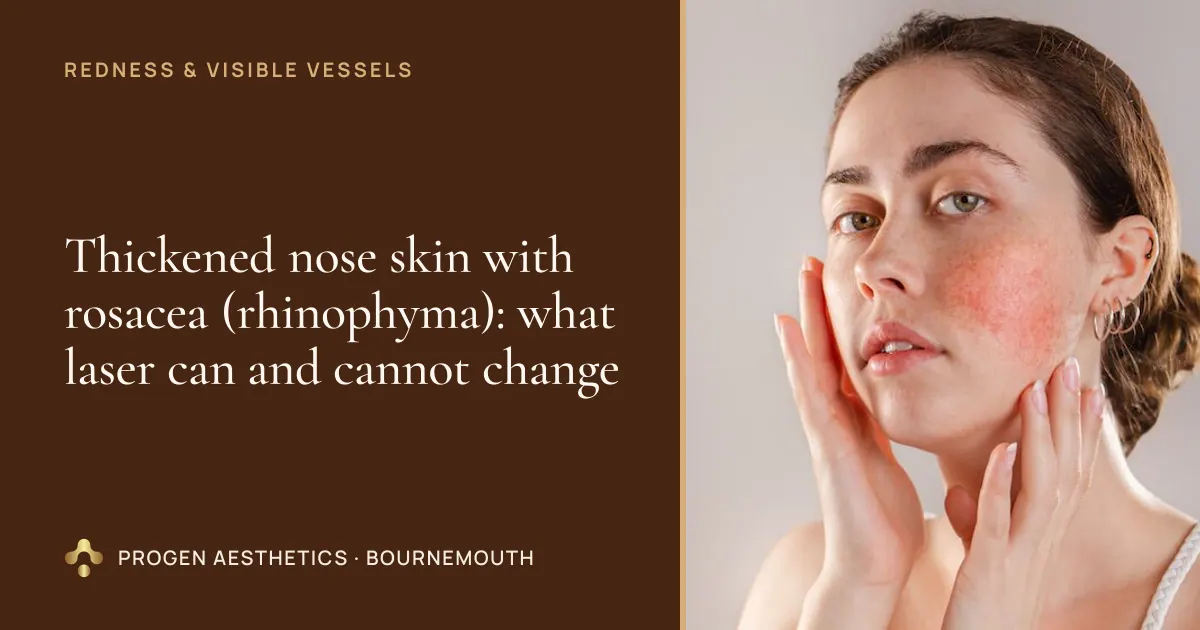
Short answer: rhinophyma is the stage of rosacea where nose skin thickens and the oil glands enlarge. A vascular laser may help the redness and visible blood vessels on the nose, but it does not reshape thickened tissue. The British Association of Dermatologists (BAD) says surgical treatment is often necessary for established rhinophyma, carried out by a dermatologist, plastic surgeon or ENT surgeon. Treating the bulk is a specialist decision, so the first step is a medical assessment, not a laser course.
What rhinophyma is
BAD describes rhinophyma as a swelling of the nose with scar-like tissue and enlarged oil-producing glands, which can make the nose redder, bulbous and bumpy over time. It usually develops where rosacea has been active for many years. The NHS lists thickened skin, mainly on the nose, as a rosacea symptom that usually appears after many years.
Two points that are often misunderstood:
- It is not caused by alcohol. BAD states there is no link between rhinophyma and excessive drinking. Alcohol can trigger flushing in rosacea, which is a separate matter.
- It mainly affects older, fair-skinned men (BAD: aged 50 to 70), although it can occur in other people, and some people have it without rosacea.
Redness, vessels or thickening? Why the difference matters
Laser works by targeting a specific thing in the skin. The nose in this condition can have several things going on at once, and each is handled differently.
| What you can see | What is happening | What may address it |
|---|---|---|
| Flushing, diffuse redness, fine visible vessels | Dilated blood vessels | Rosacea medicines from a GP or dermatologist; vascular laser or light treatment may be considered for the vessels |
| Bumps and pustules | Inflammation | Prescribed rosacea treatment |
| Thickened, bulbous, nodular or pitted skin | Gland enlargement and extra tissue | Specialist procedures that remove or reshape tissue (see below) |
DermNet describes blood vessels in rhinophyma as either thin and red or larger and purplish, and grades the condition from prominent pores only (grade 1) to thickening with a nodular outline (grade 3). Grading and diagnosis belong to a doctor.
What laser can and cannot change
What a vascular laser may do. Redness and visible vessels are the part of rosacea that Progen's rosacea treatment is about. Progen's treatment page describes redness treatment with its Candela GentleMax Pro Plus laser. Your practitioner will confirm whether your nose is suitable for it. One UK surgical clinic notes that redness can remain after tissue-reducing surgery and may then be a separate rosacea-laser question (Centre for Surgery, accessed 9 November 2026), which is a clinic statement, not trial evidence.
What a vascular laser will not do. It is not a treatment for thickened tissue. If the nose has changed shape, a redness laser does not remove the extra tissue.
Which lasers do reshape tissue. The lasers used for this are surgical ablative lasers, mainly carbon dioxide (CO2) and erbium:YAG, used by surgeons and dermatologists alongside other methods such as electrosurgery, dermabrasion and scalpel shaving (BAD; DermNet). These are different devices from a redness laser. They remove tissue, carry a risk of scarring and pigment change, and are not a cosmetic add-on. Progen's published rosacea page does not describe ablative CO2 treatment of the nose, and this article does not suggest it.
How good is the evidence?
Limited, and the figures vary. A 2020 review (Chauhan and colleagues, Clinical, Cosmetic and Investigational Dermatology) states there are no randomised controlled trials of rhinophyma treatment; the evidence is retrospective studies, case series and case reports. Within that, it reports CO2 laser recurrence of about 1.2% (range 0 to 25%) and a complication rate of 10.5% across the studies it pooled, with satisfaction commonly reported. Those figures come from small, differently run series. They show that laser surgery can work well in specialist hands, not what to expect in any one nose. Recurrence can occur after any treatment, and BAD notes more than one attempt, or a combination of treatments, is sometimes needed.
What about tablets and creams?
Sources disagree on how much they help the thickening. BAD says creams, gels, antibiotic courses and oral isotretinoin usually work poorly for rhinophyma. DermNet describes isotretinoin as the most effective medical treatment, able to reduce bulk. The 2020 review says disease can return within a year of isotretinoin and that it must not be used in pregnancy. Isotretinoin is a prescription-only medicine. Any decision about it sits with a dermatologist or prescriber, not a laser clinic.
Why a medical check comes first
- Confirming what it is. BAD says diagnosis is usually based on appearance, and a small biopsy may be taken if unclear.
- Excluding skin cancer. DermNet notes basal cell carcinoma has been reported arising in rhinophyma, while stating rhinophyma is not considered a precursor to malignancy. The 2020 review cites an estimated 3 to 10% incidence and recommends that underlying malignancy be excluded and removed tissue examined. A nose that bleeds, ulcerates, or has a new lump growing fast should be seen by a doctor before any cosmetic treatment.
- Breathing. Significant thickening can affect the nasal airway, which is a further reason for specialist review.
Getting seen: GP, dermatology, plastic surgery
The NHS advises seeing a GP about rosacea symptoms, and a GP may refer you to a dermatologist if treatments are not working. As one example of how referral criteria are written, Leicester, Leicestershire and Rutland ICB's policy (October 2023) supports referral to a plastic surgeon for severe phymatous disease or prominent rhinophyma. Policies differ by area, and I have not seen a Dorset policy, so ask your GP what applies locally. Surgery for rhinophyma is often not funded as a cosmetic procedure in some areas, so ask early what is available.
Urgent eye symptoms: with rosacea, a painful eye, blurred vision, light sensitivity, a red eye or a gritty feeling should be treated as urgent (NHS: call 111 or ask for an urgent GP appointment).
Everyday care that helps either way
BAD suggests daily sun protection (SPF 30 or higher), gentle cleansing without rubbing or scrubbing, unperfumed products and avoiding sunbeds. Camouflage make-up can reduce redness but cannot change shape or texture.
Questions to take to an appointment
- Is this rhinophyma, or something else on the nose that needs checking?
- Should anything be biopsied before treatment?
- Which part would be treated by a medicine, a surgical procedure, or a redness laser?
- If surgery is advised, who performs it, and is it available on the NHS where I live?
- If redness remains afterwards, when would a vascular laser be considered?
- What are the scarring and pigment-change risks for my skin tone?
When a Progen consultation may fit
If your main concern is redness and visible vessels, Progen's rosacea and diffuse redness treatment page explains the laser, preparation and aftercare. A practitioner will assess your skin and tell you honestly whether laser is suitable or whether you should see your GP or a dermatologist first. If you are weighing light treatments for redness, our article on IPL or laser for rosacea redness compares them, and Facial thread veins vs rosacea helps tell vessel concerns apart. Prices are on the prices page and questions can go through the contact page.
Sources accessed 9 November 2026. This article is general information, not a diagnosis.
Frequently asked questions
Can laser remove rhinophyma?
Surgical ablative lasers such as CO2 are one of several specialist methods used to remove and reshape thickened nose tissue, alongside electrosurgery, dermabrasion and scalpel shaving, according to the British Association of Dermatologists and DermNet. A vascular laser for redness is a different treatment and does not remove thickened tissue.
Does alcohol cause rhinophyma?
The British Association of Dermatologists states there is no link between rhinophyma and excessive drinking. Alcohol can trigger flushing in people with rosacea.
Can rhinophyma be treated with tablets or creams alone?
Sources differ. BAD says creams, antibiotics and isotretinoin usually work poorly for established rhinophyma, while DermNet describes isotretinoin as the most effective medical option for reducing bulk. Isotretinoin is prescription-only and must not be used in pregnancy, so this is a decision for a dermatologist or prescriber.
Should thickened nose skin be checked before cosmetic treatment?
Yes. Basal cell carcinoma has been reported in rhinophyma, so a doctor should confirm the diagnosis and, where needed, exclude skin cancer, particularly if an area bleeds, ulcerates or grows quickly.
Can rhinophyma come back after treatment?
Recurrence can occur. BAD notes more than one treatment may be needed, and published recurrence figures for CO2 laser vary widely between small studies (about 1.2% pooled, range 0 to 25% in one 2020 review).
Read about rosacea and diffuse redness treatment at Progen
Sources and further information
- Definition; mainly fair-skinned men aged 50 to 70; no link to excessive drinking; creams, antibiotics and isotretinoin usually work poorly; surgical treatment (dermabrasion incl. laser, electrosurgery, scalpel excision) often necessary; treated by dermatologists, plastic or ENT surgeons; recurrence possible; SPF 30+ and gentle skincare; diagnosis by appearance, biopsy if unclear.
- Grading 1 to 3; vessel appearance; isotretinoin described as most effective medical treatment; laser resurfacing options (CO2, argon, Nd:YAG, Er:YAG); BCC reported in rhinophyma but not a precursor to malignancy.
- Thickened skin mainly on the nose is a rosacea symptom appearing after many years; GP may refer to a dermatologist; urgent eye symptoms need 111 or urgent GP appointment.
- No RCTs; CO2 laser recurrence about 1.2% (range 0-25%), complication rate 10.5%; isotretinoin may recur within a year and is teratogenic; BCC estimated 3-10%, exclude malignancy and examine excised tissue.
- Example of referral criteria: plastic surgery referral for severe phymatous disease or prominent rhinophyma; dermatology for persistent distressing symptoms.
- A private surgical clinic states redness can remain after surgery and may need separate rosacea laser; NHS funding varies.
- Consulted only; single-patient 2025 case report of CO2 laser plus isotretinoin. Not used for any claim in the copy.
More in rosacea and redness
Questions people ask next
- Rosacea Treatment in Bournemouth: A Complete Guide for Clearer, Calmer Skin
- Rosacea Flushing or Persistent Redness: What Light Treatment Can Target
- Rosacea Triggers and Treatment Planning: A Practical Guide
- IPL or Laser for Rosacea Redness: How the Light Treatments Differ
Treatment details, suitability and booking: rosacea treatment in Bournemouth. All rosacea and redness guides
Make an informed next step
Bring your questions
to a consultation.
A guide can help you prepare. Your assessment determines which options are appropriate for you.
Continue reading: Facial Thread Veins vs Rosacea: What Is the Difference?