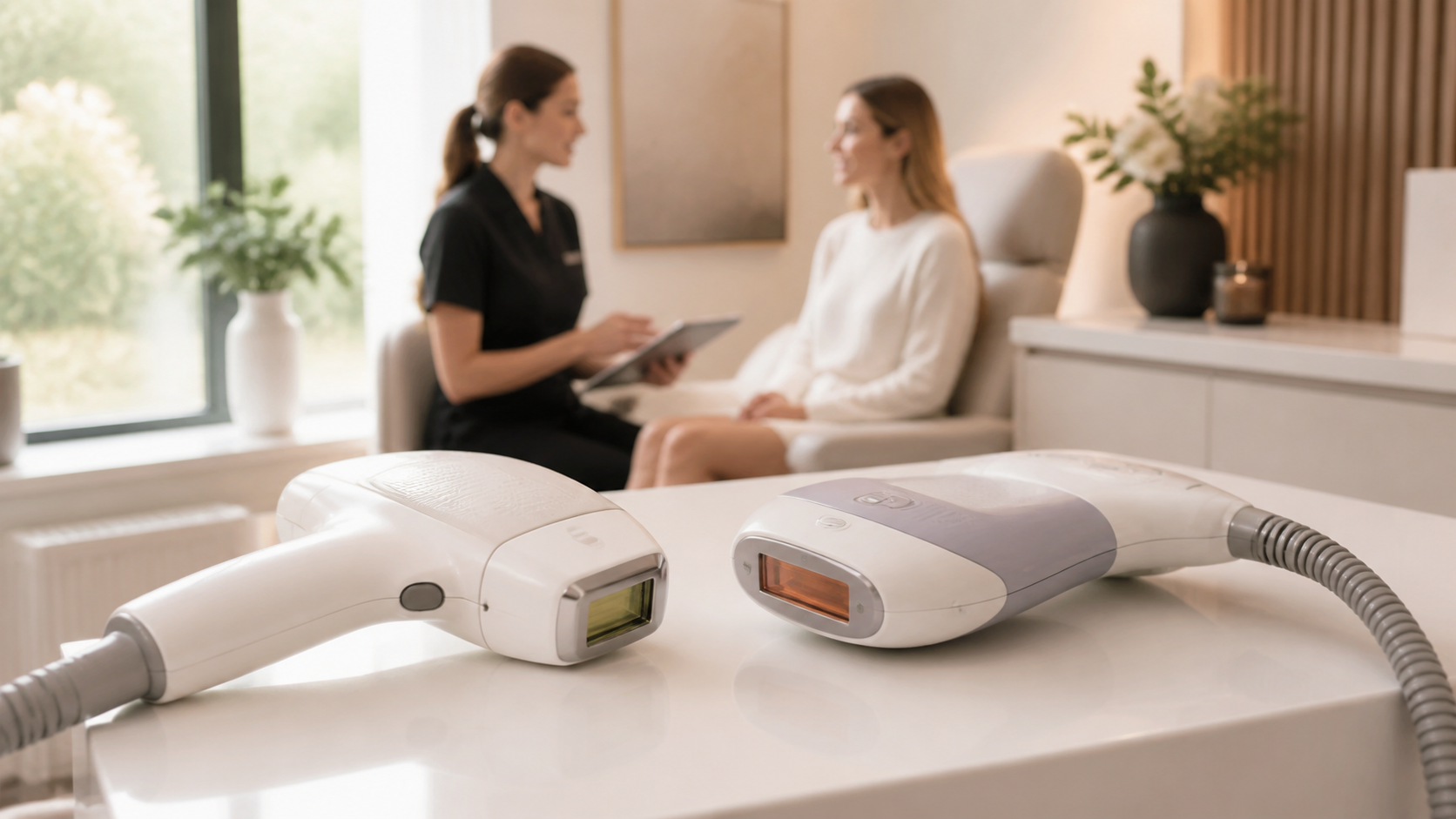
A high-quality aesthetic consultation should help you make an informed decision—even if that decision is not to proceed. It should clarify your concern, suitability, alternatives, costs, risks, recovery and who will look after you if something goes wrong.
Use these 12 questions when comparing a laser, injectable, PRP or skin-treatment consultation in Bournemouth.
1. What exactly are we treating?
Ask the practitioner to define the concern rather than jump straight to a product or machine. Redness, pigmentation, hair loss and nail change can each have multiple causes, and some require medical assessment.
2. What are your qualifications and experience?
Find out who will assess you and who will perform the procedure. Ask about training specific to the proposed device, product and treatment area—not just years spent in the beauty or medical sector generally.
3. Why is this option suitable for me?
A personalised answer should refer to your goals, skin or hair assessment, relevant health information and risk profile. “It works for everyone” is not an acceptable explanation.
4. What alternatives should I consider?
Alternatives may include skincare, prescription treatment, a different device, referral, observation or no treatment. Understanding them protects you from making a decision based on a single sales pitch.
5. What result is realistic?
Ask what typically changes, what will not change and how progress is measured. Before-and-after photographs can illustrate possibilities, but they do not predict your individual outcome.
6. How strong is the supporting evidence?
“Clinically proven” can be used loosely. Ask whether evidence relates to the exact indication, device or product being recommended, and whether important uncertainty remains.
7. What are the common and serious risks?
Every procedure has possible adverse effects. Ask about common short-term reactions, less common complications, how risks differ for your skin type or medical history, and what steps reduce them.
8. What preparation and downtime are involved?
Clarify sun exposure, active skincare, exercise, makeup, medicines and scheduling around important events. Do not stop prescribed medication without advice from the prescriber.
9. How many sessions and maintenance visits might I need?
Courses can be appropriate, but the recommendation should be justified. Ask how the plan changes if response is slower than expected and whether maintenance is optional or likely.
10. What is the full cost?
Request a clear total that includes consultation, patch test, sessions, products, reviews and aftercare. Understand cancellation terms and whether unused package sessions are refundable.
11. Who provides aftercare and manages complications?
You should receive contact details, written aftercare and a clear route for urgent concerns. Ask whether the treating practitioner will review you and what external medical support is available if necessary.
12. Can I take time to decide?
For non-urgent cosmetic treatment, you should be able to consider the information without pressure. Be cautious about time-limited discounts, immediate deposits or claims that you must act that day.
Useful information to bring
- a list of medicines, supplements and allergies;
- relevant diagnoses, pregnancy or breastfeeding status;
- previous procedures and any complications;
- your current skincare or hair-care products;
- photographs showing an intermittent concern;
- your priorities, budget and tolerance for downtime.
Signs of a responsible consultation
The practitioner listens, examines the relevant area, discusses uncertainty, documents consent, does not guarantee results and is willing to refer when a concern lies outside their scope. Patch testing is used where indicated, and aftercare is explained before payment.
Warning signs
- guaranteed or permanent results without qualification;
- no discussion of medical history or contraindications;
- unclear product or device identity;
- pressure to buy a package immediately;
- no written risks, aftercare or complaints pathway;
- treatment of an unexplained lesion without suitable assessment.
Frequently asked questions
Should consultation and treatment happen on the same day?
That depends on the procedure and applicable standards, but you should never feel rushed. Some treatments require a patch test, cooling-off period or additional medical information.
Are cheaper treatments always unsafe?
Price alone does not prove quality. Compare qualifications, device or product, assessment, aftercare, insurance and total treatment plan rather than the headline fee.
Can I bring someone with me?
Many clinics allow this. A trusted person can help you remember information, but consent and the final decision must remain yours.
A consultation is part of the treatment
Good outcomes begin with correct assessment and clear expectations. Explore our Bournemouth aesthetic treatments, review our gallery, or contact Progen Aesthetics to arrange a consultation.
Medical note: This checklist provides general information and is not a substitute for personalised medical advice.
Further reading: NHS guidance on choosing a cosmetic practitioner.