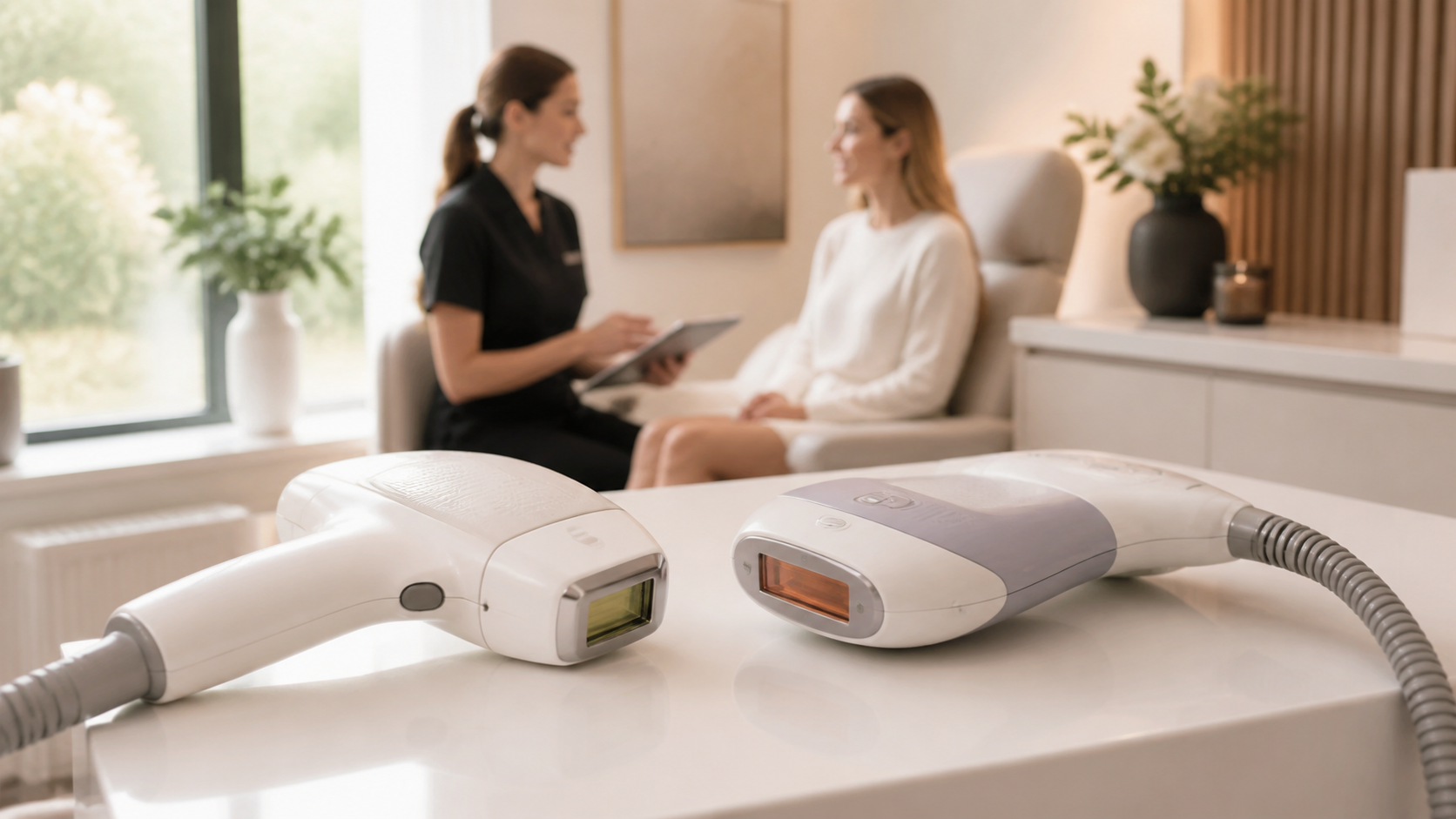
Laser hair removal for different skin tones can be safe and effective when the wavelength, settings, cooling and aftercare are selected for the individual. Skin tone is not a reason to accept a generic protocol; it is a reason to insist on an informed assessment.
This Dorset guide explains what clients from Bournemouth, Poole, Christchurch and surrounding areas should ask before treatment.
Why skin tone changes treatment planning
Hair-reduction lasers target pigment in the hair follicle. Because skin also contains pigment, the practitioner must balance effective energy delivery with protection of the surrounding skin. Recent sun exposure, tanning products, medications, hair colour and the body area also matter.
A comprehensive review of laser and light treatments in Fitzpatrick skin types IV–VI found that longer wavelengths and appropriate protocols are important considerations. See the peer-reviewed review on PubMed.
Technology is not the whole safety system
A device name alone does not guarantee a result. Practitioner experience, consultation quality, a clear treatment record, cooling, patch testing and review of the skin response are all part of responsible care. Our laser hair removal service page explains the clinic pathway and available treatment.
What to disclose at consultation
- Your natural skin tone and any recent sun or self-tan exposure.
- Medicines, supplements and topical products you use.
- Any history of pigmentation changes, keloid scarring, cold sores or unusual skin reactions.
- Previous laser or IPL treatment and how your skin responded.
- Changes in hair growth that may warrant medical assessment.
Do not stop prescribed medicine without advice from the prescriber. A clinic should use your information to decide whether to proceed, postpone, patch test or recommend another route.
Hair colour matters too
Dark, coarse hair often provides more pigment for light-based systems to target. White, grey, very light blonde and some red hair may respond poorly. Honest expectations are more useful than a guaranteed session count.
Questions to ask your practitioner
- Which wavelength will you use for my skin and hair, and why?
- How often do you treat people with a similar skin tone?
- What temporary responses are expected, and what symptoms require contact?
- How should I manage sun exposure before and after treatment?
- How will settings change if my skin or hair response changes?
The American Academy of Dermatology advises asking about experience treating your skin colouring and having a consultation before treatment. Read its laser preparation guidance.
Frequently asked questions
Can darker skin tones have laser hair removal?
Yes, but assessment, wavelength selection and settings require relevant experience. Suitability remains individual.
Why might a patch test be needed?
It can help the practitioner observe a small area’s response before treating a larger area, although it cannot remove every risk.
Can I have treatment with a tan?
Recent tanning may increase risk. Disclose it and follow the clinic’s advice on postponement.
Arrange an individual assessment
For a personalised plan, contact our Bournemouth clinic. We welcome clients from Poole, Christchurch, Ferndown, Wimborne and nearby Dorset.
This is general education, not a diagnosis or personalised medical advice.